
What Is Integrative Pet Wellness?
A Broader Way to Think About Well-Being
At some point, many families ask the same question:
What else can I do to support my companion?
The question may arise as an animal grows older, recovers from a health challenge, adjusts to a new environment, or begins experiencing changes in mobility, behavior, sleep, or routine.
Integrative pet wellness offers a thoughtful framework for considering the animal’s experience as a whole. It combines responsible veterinary care with close attention to the everyday factors that influence comfort, engagement, and quality of life.
It is not an alternative to veterinary medicine. It is a broader way of observing, supporting, and caring for an animal alongside appropriate professional care.
What Whole-Animal Wellness Considers
An animal’s well-being is shaped by more than a single symptom or intervention. It reflects the relationship among several areas of daily life:
Physical comfort and mobility
Nutrition and hydration
Sleep and restorative rest
Environment and routine
Emotional and behavioral well-being
Social connection and engagement
These factors are closely connected. A change in mobility may affect confidence. An unfamiliar environment may influence sleep or appetite. Reduced interaction may signal discomfort, stress, fatigue, or another concern requiring attention.
Looking at the whole animal does not mean assuming what a change represents. It means noticing patterns, documenting them carefully, and sharing relevant observations with a licensed veterinarian.
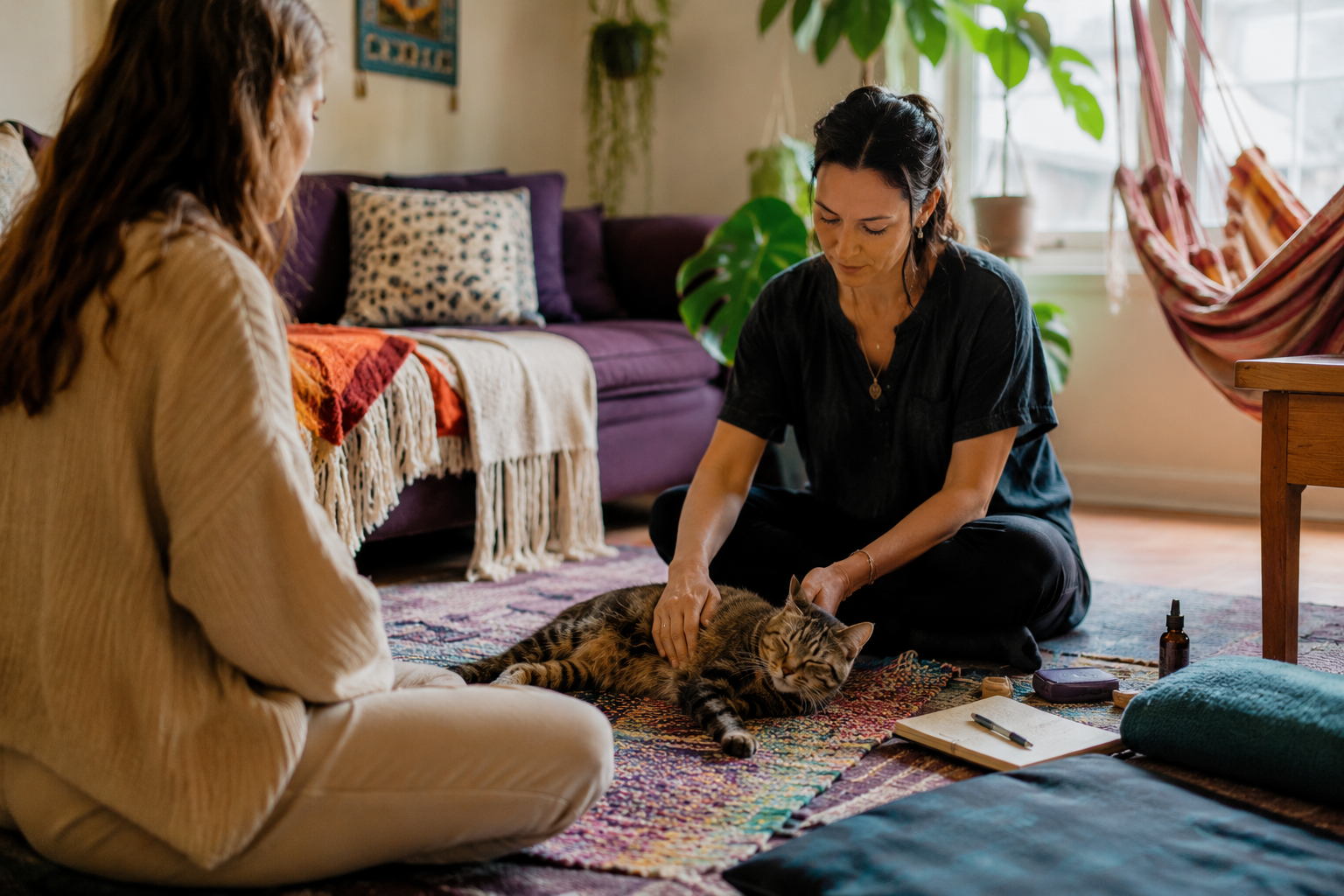
Well-being is influenced not only by care, but also by the environments animals experience every day.
Where Complementary Approaches Fit
Complementary wellness approaches are intended to support an animal’s overall experience—not diagnose a condition, treat disease, or replace veterinary recommendations.
Depending on the animal’s needs and circumstances, families may explore:
Environmental enrichment and thoughtful adjustments to the home
Gentle routines that encourage rest, predictability, and relaxation
Owner-guided activities that support connection and engagement
Touch-based or light-based wellness modalities
Other non-clinical approaches selected with appropriate professional guidance
No modality is right for every animal. Species, age, temperament, medical history, current treatment, mobility, and individual tolerance all matter.
Research continues to evolve in many areas of complementary wellness, and individual experiences can vary. For that reason, responsible use begins with realistic expectations, informed decisions, and coordination with veterinary care whenever a health concern is involved.
Observation Is the Foundation
One of the most useful wellness practices is also one of the simplest: paying close attention.
Animals communicate through changes in behavior and routine. Families are often the first to notice that something feels different.
Useful observations may include changes in:
Movement, posture, or willingness to use stairs
Appetite, hydration, or bathroom habits
Sleep patterns and preferred resting places
Curiosity, play, and social interaction
Grooming, vocalization, or sensitivity to touch
Comfort with familiar routines and environments
A single change may not tell the whole story. Patterns observed over time can provide more meaningful information.
Keeping brief notes, photographs, or videos can help families describe those changes more accurately during veterinary conversations. Observation does not replace professional evaluation; it helps make that evaluation better informed.

Well-being is influenced not only by care, but also by the environments animals experience every day.
Questions to Ask Before Trying Something New
A responsible wellness decision should begin with questions—not promises.
Before introducing a complementary product, technology, or service, consider:
What specific purpose is it intended to support?
Is it appropriate for this animal’s species, age, and current condition?
What evidence, limitations, and safety considerations should be understood?
Who is providing the service, and what qualifications do they have?
Could it interfere with existing veterinary care, medication, or recovery?
How will the animal’s comfort and response be monitored?
Be cautious of any product or practitioner promising guaranteed results, cures, or an immediate solution. Credible wellness support respects uncertainty, recognizes professional boundaries, and keeps the animal’s safety at the center of every decision.
A Thoughtful Way Forward
Integrative pet wellness is not about doing everything. It is about choosing carefully.
It encourages families to look beyond isolated concerns and consider the many factors that shape an animal’s daily experience. Sometimes the most meaningful support begins with a quieter environment, a more predictable routine, closer observation, or a better-prepared conversation with a veterinarian.
Well-being is rarely the result of one action. More often, it is supported through a series of informed, compassionate choices made over time.
That is the value of a whole-animal perspective: seeing the companion in front of us—not simply a symptom, age, or condition—and responding with care, curiosity, and respect.
